The Unyielding Patriot: John Adams, Faith, and the Founding of a Nation
US PRESIDENTS SERIESWEEKLY BLOGS
7/18/20264 min read


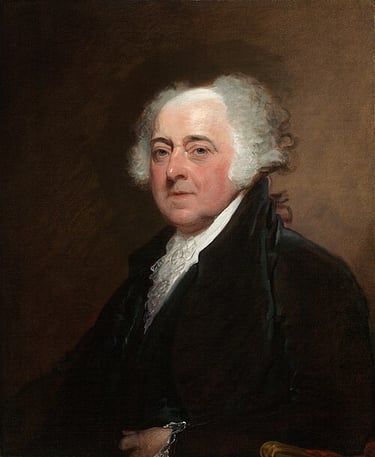
Portrait, c. 1800–1815
An Evolving Faith in Later Years
To understand Adams fully, one must acknowledge that his theology evolved. While raised a strict Calvinist Congregationalist, he grew uncomfortable with rigid dogma. In his later years, he aligned more closely with Unitarianism, rejecting the doctrine of the Trinity and emphasizing reason alongside revelation.
When we picture the Founding Fathers, John Adams often stands in the formidable shadow of George Washington or the eloquent brilliance of Thomas Jefferson. Yet, John Adams was the engine of the American Revolution—a man of fierce intellect, stubborn resolve, and deep, evolving faith.
His life wasn't just a political journey; it was a spiritual one. For Adams, faith and freedom were inextricably linked. Let’s explore the life, legacy, and faith of the second President of the United States.
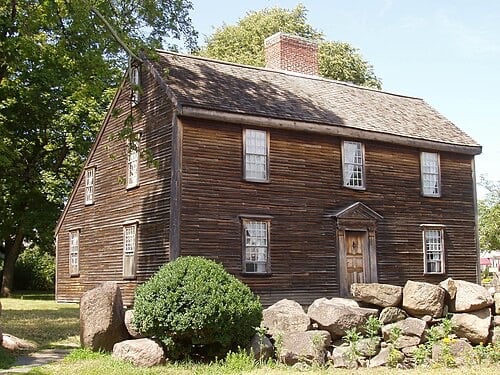
Adams's birthplace in present-day Quincy, Massachusetts
Puritan Roots and the Pursuit of Justice
Born in 1735 in Braintree, Massachusetts, Adams was the son of a Puritan deacon. His father deeply desired for John to enter the ministry. While Adams ultimately chose the law over the pulpit, the Puritan emphasis on providence, education, and moral duty never left him.
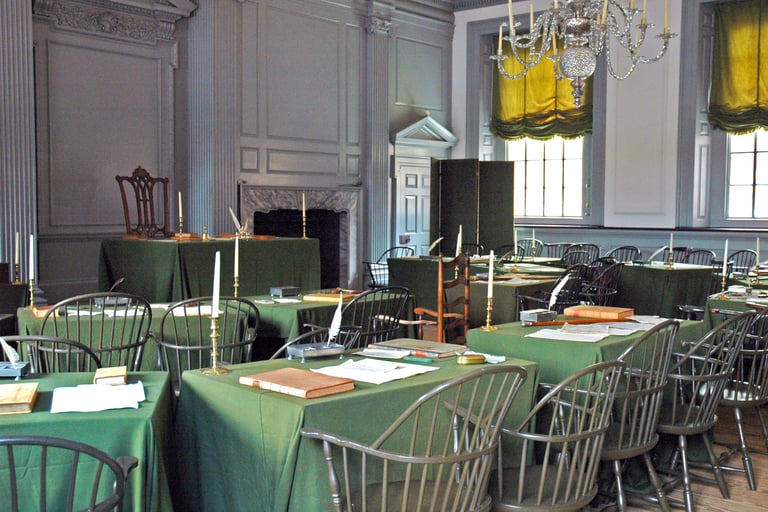
The Assembly Room at Independence Hall in Philadelphia, where the Second Continental Congress adopted the Declaration of Independence
Adams viewed his legal career as a calling to uphold divine justice. This was most famously tested when he defended the British soldiers accused in the Boston Massacre. Despite the intense public outrage, Adams believed everyone deserved a fair trial, guided by the conviction that truth matters more than popular opinion.
"To do what is right and just is more acceptable to the LORD than sacrifice." — Proverbs 21:3 (NIV)
Adams risked his career and safety to do what was right, demonstrating a faith that lived in action, not just in words.
A Revolution Driven by Providence
As tensions with Britain boiled over, Adams became the loudest voice for independence in the Continental Congress. He didn't view the Revolution as a mere political dispute; he saw the hand of Providence guiding the American colonies toward a destiny of freedom.
He firmly believed that the foundations of this new nation were built on eternal, God-given truths. Reflecting on the unity of the colonies years later, Adams wrote to Thomas Jefferson:
"The general principles on which the fathers achieved independence... were the general Principles of Christianity, in which all those Sects were united."
Adams understood that true liberty was a spiritual inheritance, echoing the biblical call to freedom:
"It is for freedom that Christ has set us free. Stand firm, then, and do not let yourselves be burdened again by a yoke of slavery." — Galatians 5:1 (NIV)
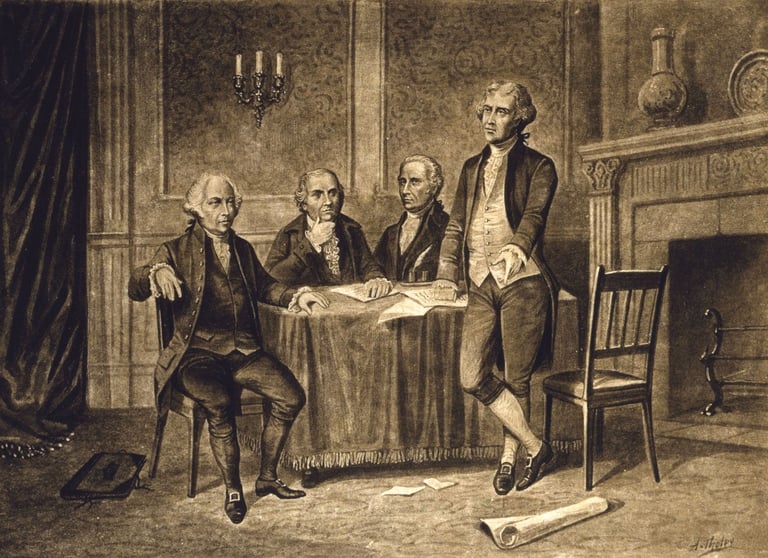
Leaders of the Continental Congress (from left to right): John Adams, Gouverneur Morris, Alexander Hamilton, and Thomas Jefferson.
The Moral Foundation of the Republic
One of Adams' most profound beliefs was that a free republic could only survive if its citizens were governed by internal morality. Laws alone could not restrain a corrupt society. He famously declared to the Massachusetts militia in 1798:
"Our Constitution was made only for a moral and religious people. It is wholly inadequate to the government of any other."
For Adams, religion wasn't just a private comfort; it was a public necessity. He believed that the teachings of the Bible provided the ultimate framework for a just and flourishing society.
"Suppose a nation in some distant Region should take the Bible for their only law Book, and every member should regulate his conduct by the precepts there exhibited! Every member would be obliged in conscience, to temperance, frugality, and industry; to justice, kindness, and charity towards his fellow men... What a Eutopia, what a Paradise would this region be."
"Your word is a lamp for my feet, a light on my path." — Psalm 119:105 (NIV)
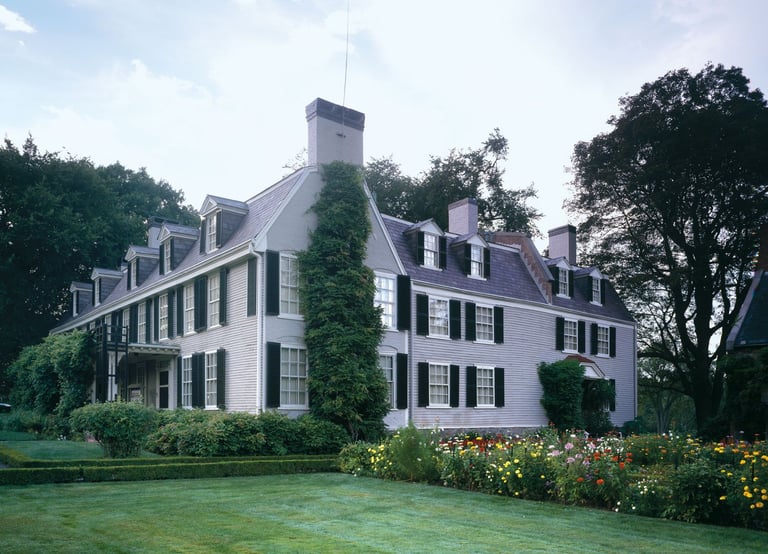
The Old House, or Peacefield, in Quincy, Massachusetts, home to the Adams family from 1788 to 1927.
However, his reverence for God as the Creator and his devotion to the moral teachings of Jesus never wavered. He spent his retirement in Quincy, Massachusetts, reading voraciously, corresponding with his old friend and rival Thomas Jefferson, and reflecting on the divine orchestration of his life.
Adams passed away on July 4, 1826—the 50th anniversary of the adoption of the Declaration of Independence. His last words, famously, were, "Thomas Jefferson survives" (unaware that Jefferson had died just hours earlier).
A Legacy of Conviction
John Adams was not a perfect man. He was vain, argumentative, and deeply stubborn. Yet, his faith gave him the courage to stand against empires, to champion a constitution built on human dignity, and to recognize that America’s grand experiment relied entirely on the moral character of its people.
His life serves as a powerful reminder that true patriotism requires more than just loving your country—it requires a commitment to the eternal principles of justice, truth, and faith.


Connect
Join the journey with faith and hope
kaitlin@frontierfaith.org
© 2026. Created by Salt & Stone Web Design. All rights reserved.