The Faith and Fortitude of George Washington: A Leadership Anchored in Providence
WEEKLY BLOGSUS PRESIDENTS SERIES
7/10/20264 min read

The Quiet Faith
George Washington was a deeply private person when it came to his ultimate spiritual convictions. He rarely took communion and preferred broad, majestic terms like "The Great Author of the Universe" or "Providence" over specific theological jargon. Yet, his life’s work demonstrates a leader who did not rely solely on his own intellect or power. He led with the humility of a man who knew he answered to a higher power, leaving behind a legacy where faith and liberty were meant to walk hand in hand.
To learn more about the life and legacy of George Washington, watch this video on The Story of America: George Washington.
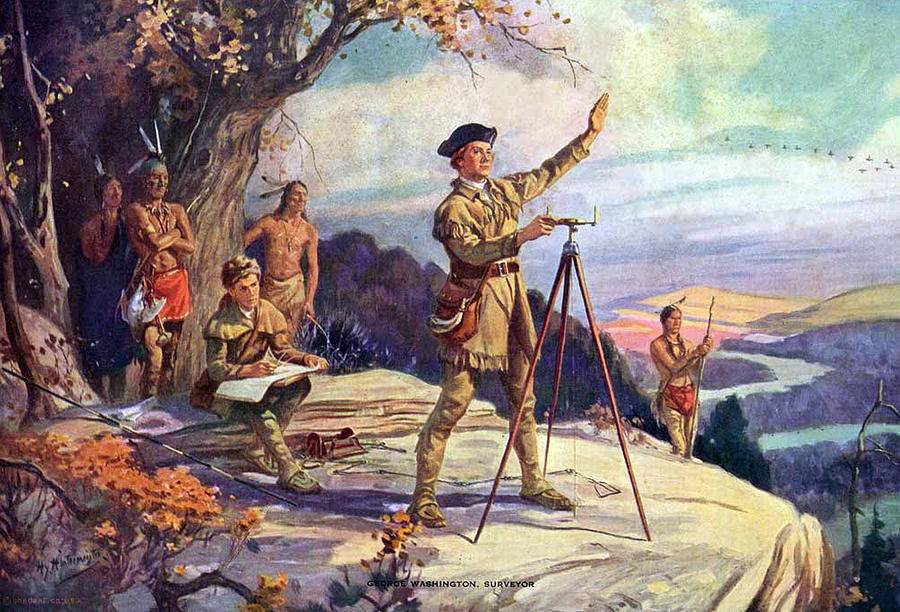
A young George Washington. Brewminate

George Washington is often remembered as a man of marble—an immovable, silent force who led a ragtag continental army to victory and shaped the American presidency. But beneath the stoic military uniform was a man driven by a deeply personal, quiet sense of faith.
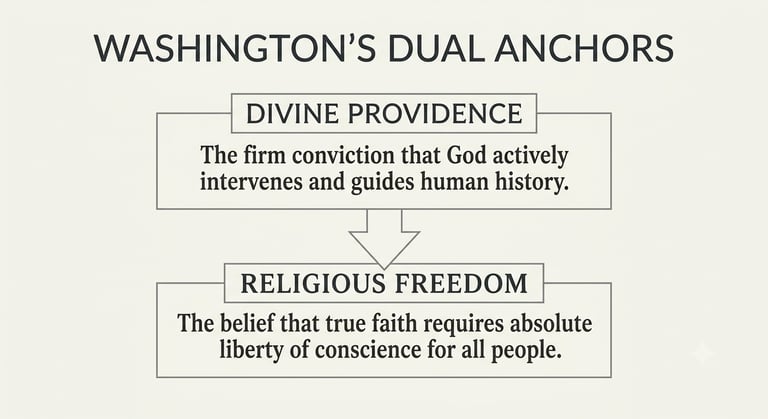
Rather than a loud, dogmatic theologian, Washington was a man who viewed his life, his army, and the birth of a new nation through the lens of Divine Providence—the protective care and intervention of God.
2. Valley Forge and the Weight of Command
The winter of 1777–1778 at Valley Forge is historically synonymous with American suffering and endurance. Faced with starvation, disease, and a lack of supplies, Washington’s leadership was tested to its absolute absolute limits.
While the famous painting of Washington kneeling in prayer in the snow at Valley Forge stems from later 19th-century accounts rather than a strict historical record, the image captures his actual spiritual posture. Washington frequently ordered his men to attend religious services and firmly believed that human military strategy was useless without Heaven's favor.
In 1778, looking back at the strange twists and turns of the war, he observed:
"The hand of Providence has been so conspicuous in all this, that he must be worse than an infidel that lacks faith, and more than wicked, that has not gratitude enough to acknowledge his obligations."
Washington understood the core principle laid out in Psalm 20:7 (NIV):
"Some trust in chariots and some in horses, but we trust in the name of the Lord our God."

3. Establishing a Nation and a Legacy of Liberty
When Washington assumed the presidency, his primary focus was uniting a fragile, fractured group of states. His faith manifested not in religious exclusion, but in a radical commitment to religious tolerance.
In his famous 1790 letter to the Hebrew Congregation in Newport, Rhode Island, he insisted that the United States would give "to bigotry no sanction, to persecution no assistance." He envisioned a nation where every person could sit safely under their own vine and fig tree—a direct reference to the Old Testament prophets.
As he closed out his public service in his famous Farewell Address, Washington left the young country with a stern warning about separating morality from public life:
"Of all the dispositions and habits which lead to political prosperity, religion and morality are indispensable supports."
This aligns seamlessly with the truth found in Micah 6:8 (NIV), a verse that beautifully encapsulates the humble, duty-bound spirit Washington strove to embody throughout his 67 years:
"He has shown you, O mortal, what is good. And what does the Lord require of you? To act justly and to love mercy and to walk humbly with your God."
1. The Crucible of Youth and Early Leadership
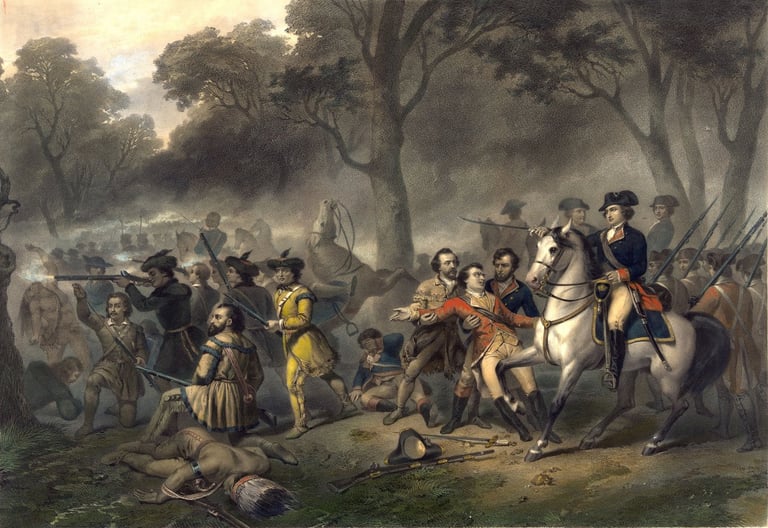
Long before he was General or President, Washington was a young commander facing the brutal realities of the French and Indian War. At the Battle of the Monongahela in 1755, Washington had two horses shot out from under him and four bullets pierce his coat, yet he emerged completely unscathed.
Reflecting on this early survival, Washington wrote to his brother:
"By the all-powerful dispensations of Providence, I have been protected beyond all human probability or expectation..."
Washington recognized early on that his life was not entirely his own; it was being preserved for a purpose greater than himself.
This mirrors the biblical reminder found in Proverbs 16:9 (NIV):
"In their hearts humans plan their course, but the Lord establishes their steps."
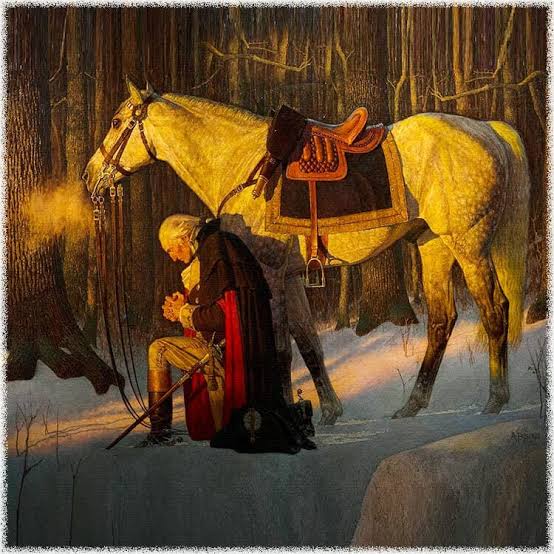


"The Prayer at Valley Forge", a 1975 painting by Arnold Friberg done for America's bicentennial celebration in 1976.
Washington at the Battle of the Monongahela in Braddock, Pennsylvania, 1755. Library of Congress

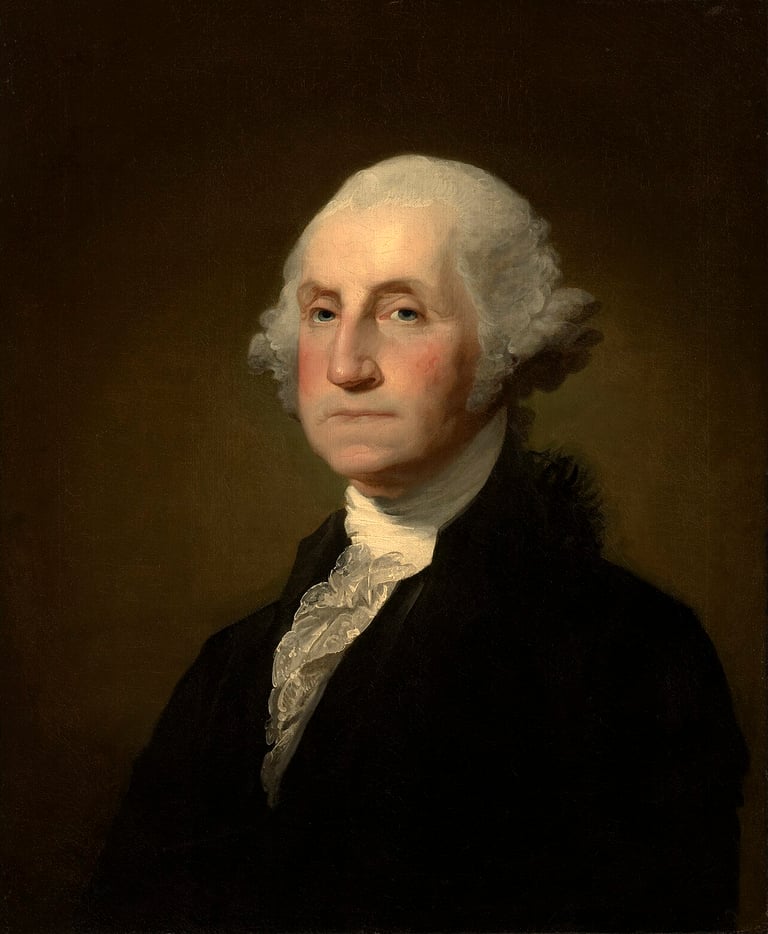
Gilbert Stuart, George Washington, 1796–1803, oil on canvas. Clark Art Institute, 1955.16
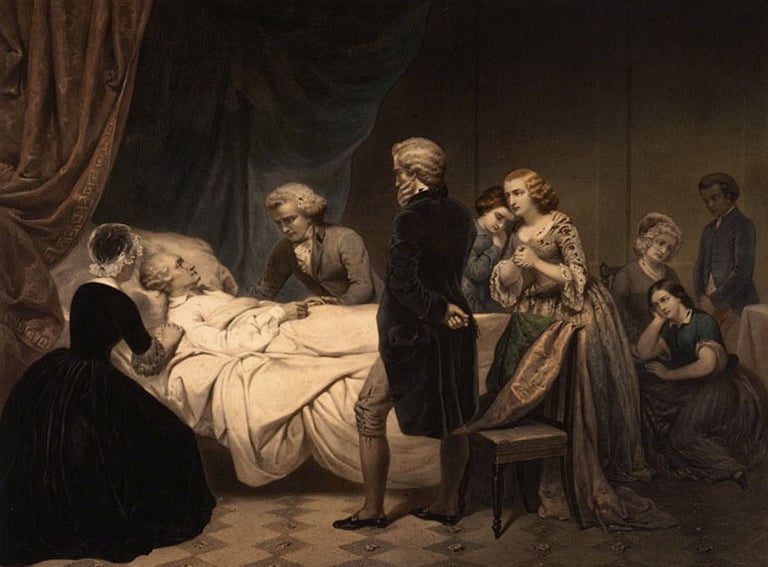
Washington on his Deathbed, an 1851 portrait by Junius Brutus Stearns


Connect
Join the journey with faith and hope
kaitlin@frontierfaith.org
© 2026. Created by Salt & Stone Web Design. All rights reserved.