Beyond the Declaration: The Life and Unconventional Faith of Thomas Jefferson
US PRESIDENTS SERIESWEEKLY BLOGS
7/25/20264 min read
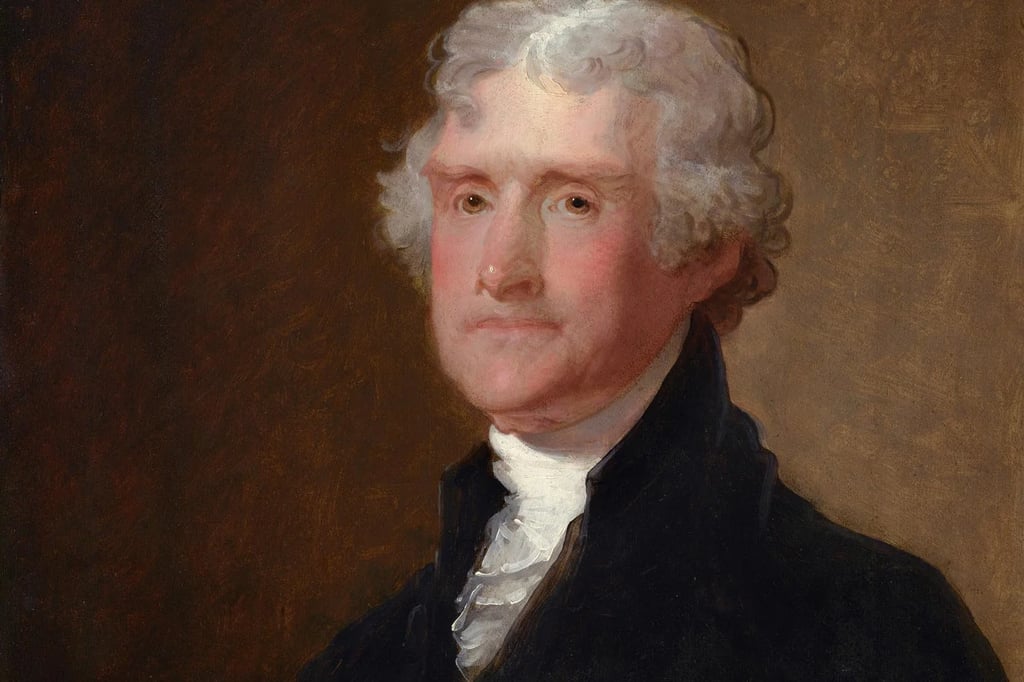
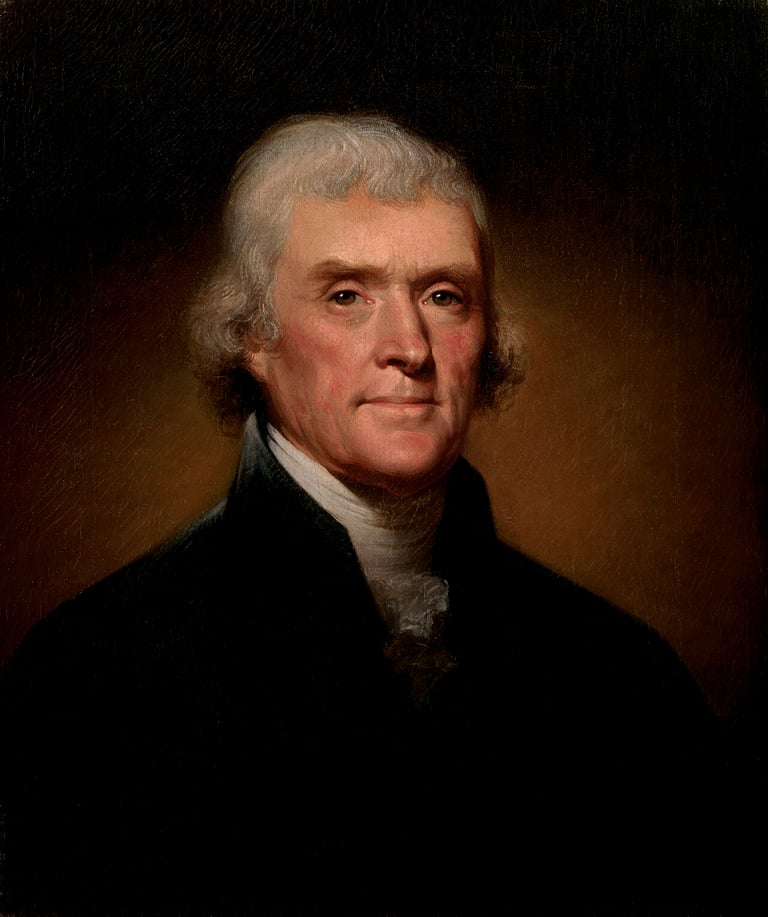
Thomas Jefferson by Rembrandt Peale. Source: Donaldson Collection / Getty Images
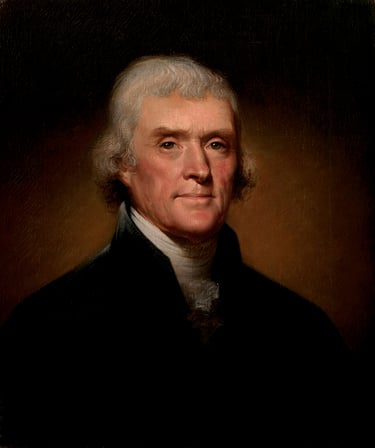
The Architect of Liberty
Born in 1743 in Virginia, Jefferson was an insatiable learner. He inherited a vast estate, but his true legacy was built with his pen. At just 33, he drafted the words that would become the moral compass of a new nation: "We hold these truths to be self-evident, that all men are created equal..."
He served as George Washington’s Secretary of State, John Adams’s Vice President, and ultimately secured the presidency in 1800. During his tenure, he doubled the size of the country through the Louisiana Purchase and launched the Lewis and Clark Expedition.
But alongside nation-building, Jefferson spent his life meticulously constructing his own philosophical worldview—often from the quiet study of his beloved home, Monticello.
Thomas Jefferson is a figure who defies simple categorization. The principal author of the Declaration of Independence, the third President of the United States, and the founder of the University of Virginia, Jefferson was a true polymath of the Enlightenment.
Yet, when we look beyond his political triumphs and architectural marvels, we find a man wrestling deeply with questions of morality, philosophy, and faith. His approach to religion was fiercely independent, deeply private, and fiercely protective of the rights of others to believe as they saw fit.


Jefferson's estate at Monticello. Source: Buddy Mays / Getty Images
A Complex Faith: The "Jefferson Bible"
To understand Jefferson’s faith is to understand a man deeply influenced by the Age of Reason. He identified largely as a Deist—someone who believes in a Creator based on the evidence of reason and nature, but rejects supernatural revelation.
He was famously critical of institutionalized religion and the theological dogmas of his day. In a letter to Ezra Stiles in 1819, he boldly stated:
"I am of a sect by myself, as far as I know."
Despite his skepticism of miracles, the resurrection, and the divinity of Christ, Jefferson held a profound reverence for the moral teachings of Jesus. He believed that if you stripped away the supernatural elements added by early church leaders, what remained was the most perfect moral code ever given to humanity.
To prove this, he took a penknife to copies of the New Testament in multiple languages, literally cutting out the miracles and pasting together the ethical teachings and parables of Jesus. This private work, titled The Life and Morals of Jesus of Nazareth, is known today as the "Jefferson Bible."
He valued the practical application of faith over theological debates. This mirrors the biblical emphasis on active, lived-out morality:
“In the same way, faith by itself, if it is not accompanied by action, is dead.” — James 2:17 (NIV)
For Jefferson, to follow Jesus was not to worship him as a deity, but to live out his precepts of love, charity, and justice. As he wrote to William Short in 1820:
"To the corruptions of Christianity I am indeed opposed; but not to the genuine precepts of Jesus himself."
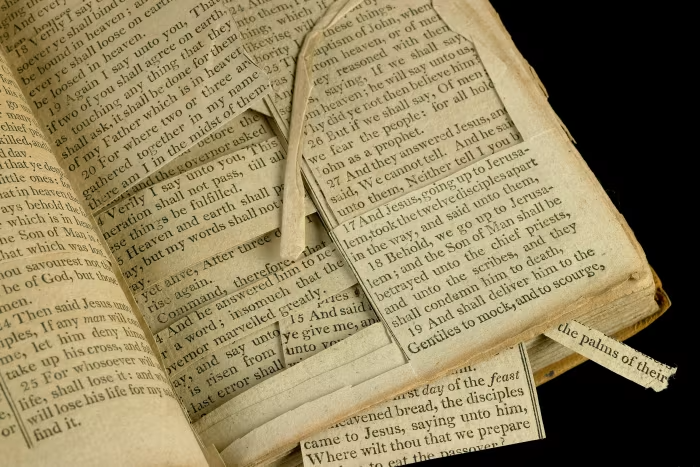
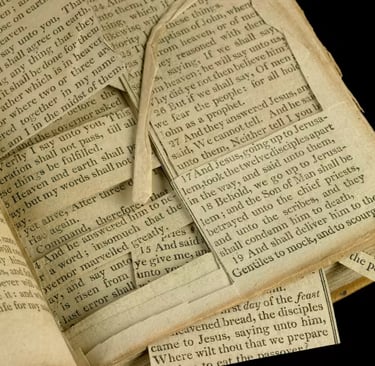
HUGH TALMAN, COURTESY OF THE SMITHSONIAN'S NATIONAL MUSEUM OF AMERICAN HISTORY
The Champion of Religious Freedom
Perhaps Jefferson’s most enduring contribution to faith in America was not theological, but legal. He firmly believed that a person’s relationship with God (or lack thereof) was entirely their own business, immune from government interference.
Before the Constitution was even written, Jefferson drafted the Virginia Statute for Religious Freedom (passed in 1786). This revolutionary document dismantled the state-sponsored church in Virginia and declared that no one could be forced to attend or support any religious institution.
His logic was simple and pragmatic:
"The legitimate powers of government extend to such acts only as are injurious to others. But it does me no injury for my neighbour to say there are twenty gods, or no god. It neither picks my pocket nor breaks my leg."
Jefferson recognized that coerced faith is no faith at all. A genuine conscience must be free to choose. This echoes the biblical principle of individual conviction before God:
“One person considers one day more sacred than another; another considers every day alike. Each of them should be fully convinced in their own mind.” — Romans 14:5 (NIV)
A Legacy Set in Stone
When Thomas Jefferson died on July 4, 1826—exactly fifty years after the adoption of the Declaration of Independence—he left strict instructions for his tombstone. He did not want his presidency or his political offices listed. Instead, he wanted to be remembered for the three things he had given to the people, rather than what the people had given to him.
His epitaph reads:
Author of the Declaration of American Independence / of the Statute of Virginia for religious freedom / & Father of the University of Virginia.
Thomas Jefferson was a man of profound contradictions—a champion of liberty who held enslaved people, and a skeptic who spent hours meticulously studying the teachings of Jesus. Yet, his relentless defense of religious liberty ensured that in the nation he helped build, faith could be a matter of personal conviction, not government mandate.
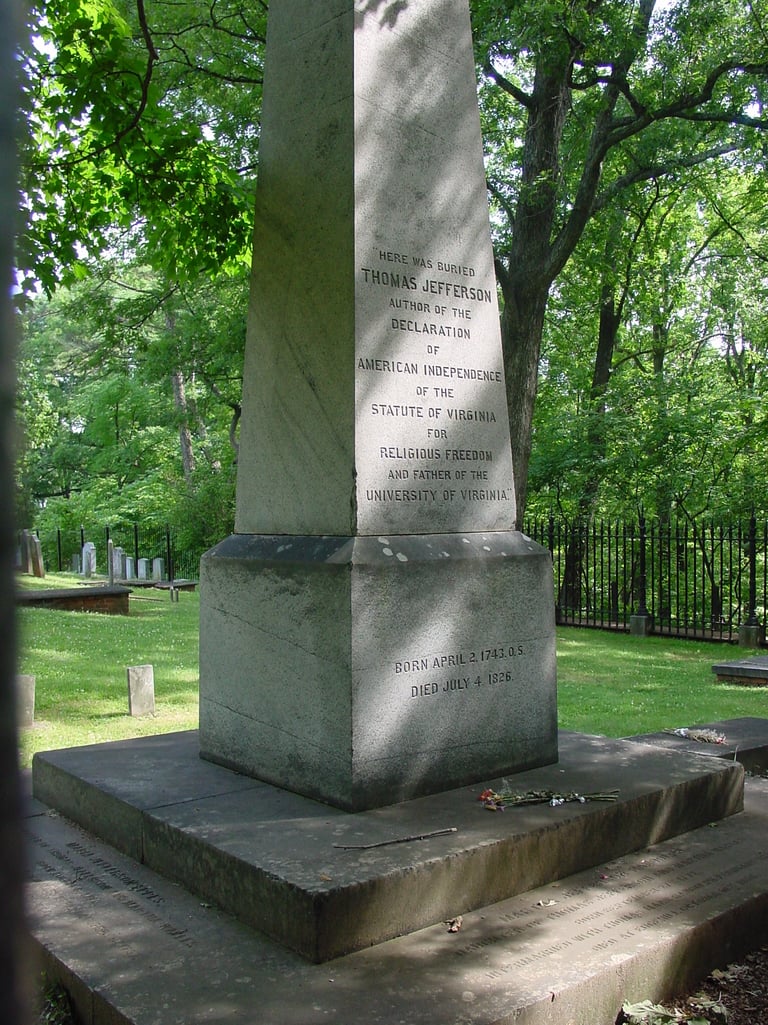
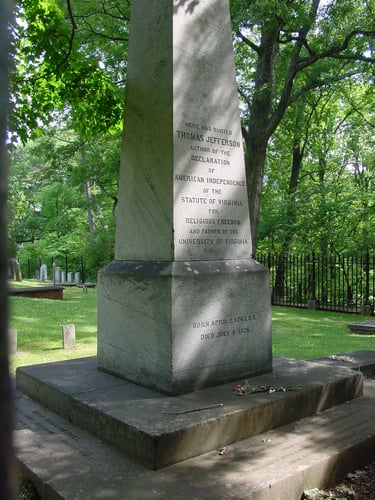
Jefferson's gravesite at Monticello


Connect
Join the journey with faith and hope
kaitlin@frontierfaith.org
© 2026. Created by Salt & Stone Web Design. All rights reserved.